Member ANBE, Earthling E-Propulsion develops integrated electric propulsion systems for recreational and light commercial vessels, combining electric motors, batteries, energy generation
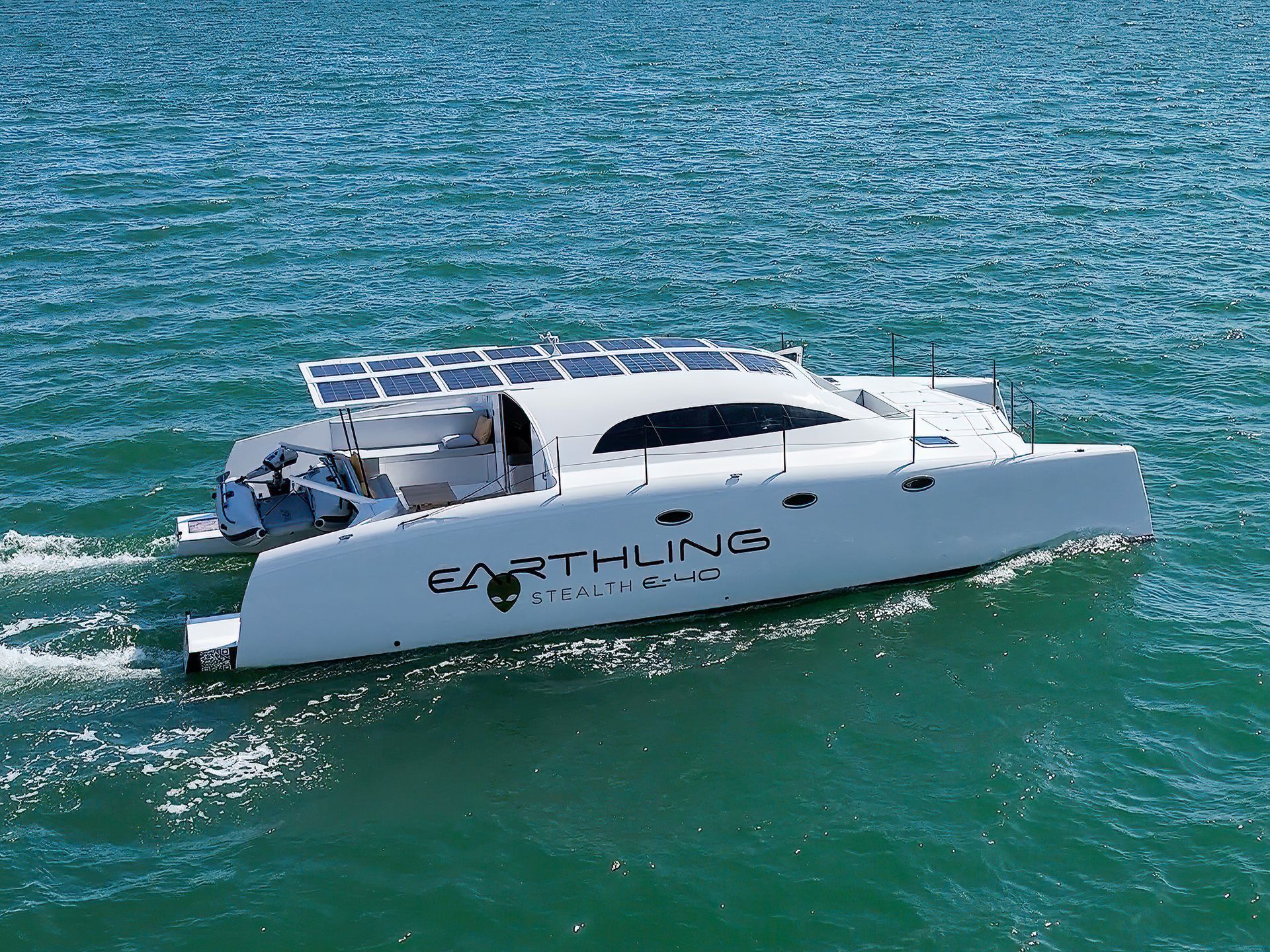
Its E-THOS system integrates multiple energy sources — such as batteries, solar power or generators — into a digital platform that manages and optimizes the boat’s energy flow.
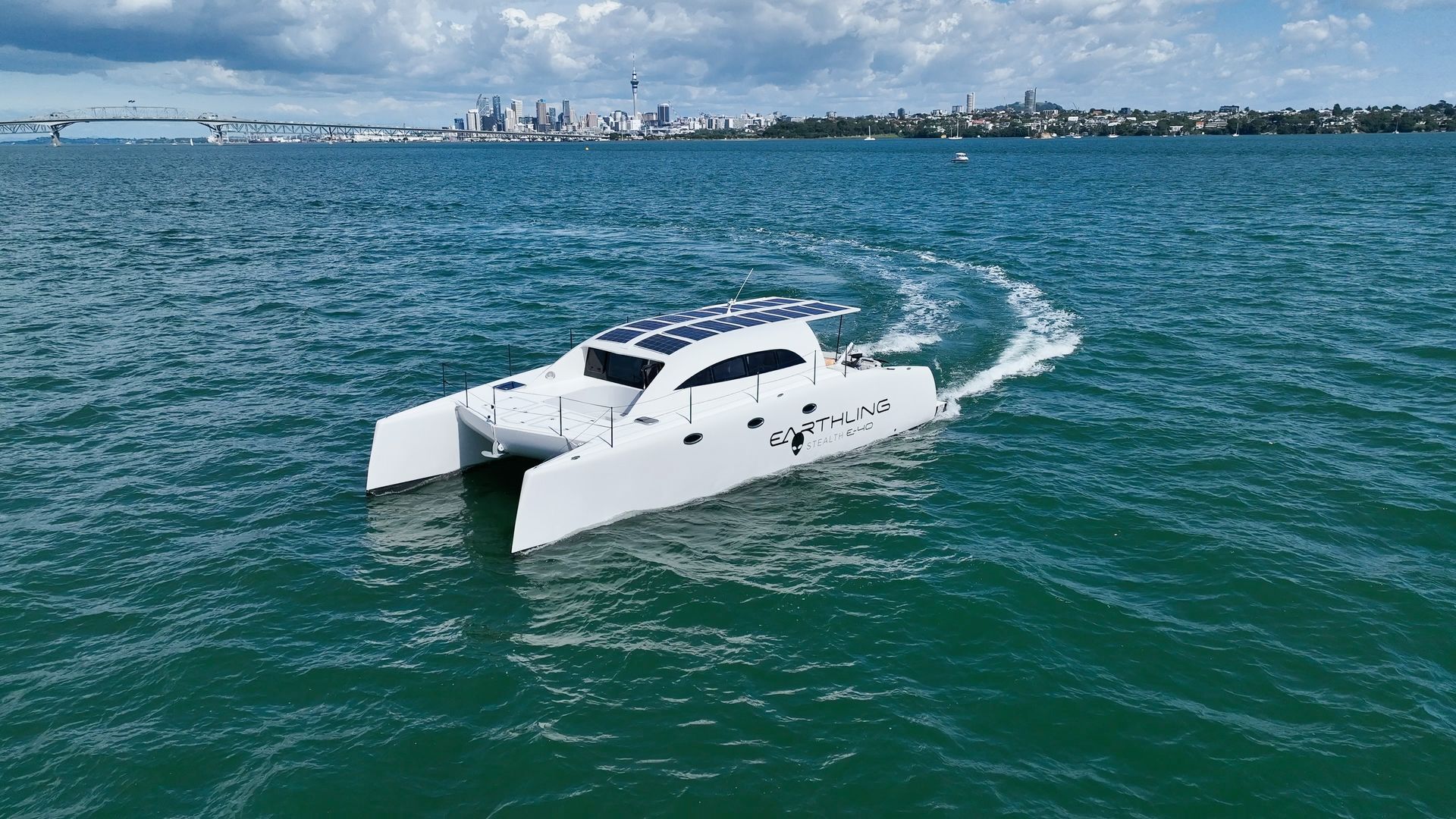
Earthling E-Propulsion is redefining the boating experience through fully integrated electric boats and propulsion systems for recreational and light commercial applications. Rather than adapting traditional designs, Earthling approaches the vessel as a complete energy platform—combining hull form, propulsion, storage, and generation into one simple, silent, safe and serviceable solution.
At the core of this approach is the E-THOS system, which seamlessly integrates multiple energy sources—such as batteries and solar—into a digital platform that manages and optimises energy use in real time. The result is greater efficiency, improved reliability, and a significantly simplified user experience.
This philosophy is demonstrated in the Earthling E40, a 12-metre electric catamaran designed from the outset as a true electric vessel. Offering quiet, low-impact operation and real passage-making capability, the E40 represents a practical alternative to both diesel and traditional sailboats. Introducing a new category in pleasure boating.
With its incorporation into ANBE, Earthling contributes to the growing European ecosystem, driving the transition toward cleaner, simpler, and more accessible boating.
1. For those who may not yet know Earthling E-Propulsion, could you briefly introduce the company and its mission within the energy transition in the marine sector?
Earthling E-Propulsion is about rethinking how we move on water. We design fully integrated electric boats and propulsion systems that replace complexity with simplicity, noise with silence, and fuel dependency with energy independence. Our mission is to deliver a better boating experience—cleaner, more efficient, and fundamentally easier to use. High efficiencies and low fuel dependence provide true autonomy at sea.
2. How did the Earthling project begin, and what inspired you to develop electric propulsion solutions for boats?
It started from frustration with traditional boating—too complex, too noisy, and too maintenance-heavy. Rather than improve parts of the system, we chose to rethink the whole vessel as an energy platform. Electric propulsion made that possible, and Earthling grew from that ground-up approach.
3. You often use the concept “sailing without sails.” What does this idea represent and what philosophy is behind it?
“Sailing without sails” is about freedom—freedom from wind dependency, from engine noise, and from operational complexity. It represents a shift toward effortless movement on water, where energy is managed intelligently and the experience becomes calm, predictable, and enjoyable “Cruising without concern”.
4. Earthling has developed the E-THOS system, which integrates different energy sources with digital vessel management. How does it work and what advantages does it offer compared to traditional systems?
E-THOS is a fully integrated energy management system that connects propulsion, batteries, solar input, and onboard systems into one intelligent platform. Instead of separate components working independently, everything is coordinated in real time. Operation of the E40 can still be entirely manual however E-THOS results in higher efficiency, better reliability, and a dramatically simpler user experience.
5. What role do renewable energy sources such as solar or wind play within your propulsion solutions?
Solar plays a meaningful supporting role, particularly in Mediterranean conditions. It continuously contributes energy, reduces dependency on shore charging, and extends time on the water. It’s not about replacing propulsion energy entirely—it’s about reducing demand and increasing autonomy.
6. What technical challenges have you faced when integrating electric motors, batteries and control systems into larger vessels?
The challenge is integration at scale—balancing weight, performance, and reliability over real-world passages, finding that sweet spot. Our approach has been to design everything as a unified system from the start to achieve a practical cruising sweet spot of 10 Knots. That’s what makes long-range electric boating viable.
7. What types of vessels benefit most from your solutions: recreational boats, charter fleets, passenger transport, tourism vessels or port services?
Our systems are particularly well suited to recreational cruising vessels, multihulls, and light commercial applications such as charter and tourism (40-65ft). These segments value simplicity, quiet operation, and low running costs—areas where electric propulsion is clearly superior.
8. The Earthling E-40 has generated significant interest in the sector. What makes it different from other electric catamarans?
The E40 stands out because it was designed from the outset as a complete electric vessel—not a converted platform. It delivers real passage-making capability, not just short-range coastal use. Combined with its simplicity, silent operation, and low operating cost, it offers a genuinely practical alternative to both diesel and sail in the 40–65-foot category. The E40 is well proven completing long solo passages with ease.
9. How do you see the electric boating market evolving in Europe over the next 5–10 years?
Europe will lead the transition. Over the next decade, electric boating will move from early adoption to mainstream, driven by regulation, infrastructure, and user demand for better experiences—not just cleaner ones. The Earthling is focused on this European lead.
10. Earthling has recently joined ANBE as a new member. What motivated you to join the association?
ANBE represents a collaborative approach to accelerating electric boating in Europe. Joining allows us to contribute to and benefit from a network of innovators, shipyards, and institutions working toward the same goal. Arriving from the Pacific ANBE was a welcome partner to find.
11. How important is collaboration between companies, shipyards, ports and institutions to accelerate the electrification of the marine sector?
It’s essential. Electrification is not just about technology—it’s about ecosystems. Infrastructure, regulation, and industry alignment all need to move together. Collaboration shortens development cycles and helps establish standards that benefit the entire sector.
12. What opportunities do you see for the development of electric boating in Spain and the Mediterranean?
The Mediterranean is ideal for electric boating—calm conditions, high solar availability, and dense marina networks. Spain, in particular, is well positioned to become a leader in this space, both as a market and as a hub for innovation and deployment.
13. You will be participating in the Barcelona Electric Marine Show 2026. What does this event represent for your company?
It’s a platform to demonstrate that electric boating is no longer experimental—it’s operational, proven, and ready for market adoption. The E40 is safe low voltage and charges from standard shore power of 7KW, no need to wait for infrastructure to catch up.
14. What will visitors be able to discover about Earthling during the event?
Visitors will see a real-world example of practical electric boating through the E40, along with the thinking behind it—how integration, simplicity, and user experience come together.
15. What message would you like to share with the marine industry about the future of sustainable navigation?
This transition is not about compromise—it’s about improvement. Electric propulsion delivers a quieter, simpler, and more enjoyable boating experience. That’s what will drive adoption.
16. Finally: if you had to describe the future of electric boating in one sentence, what would it be?
Electric boating will replace complexity with simplicity—and redefine what people expect from being on the water.